Latest Updates
Toll free: 1-800-212-3001 Apply online Pay online



Blog
Blog
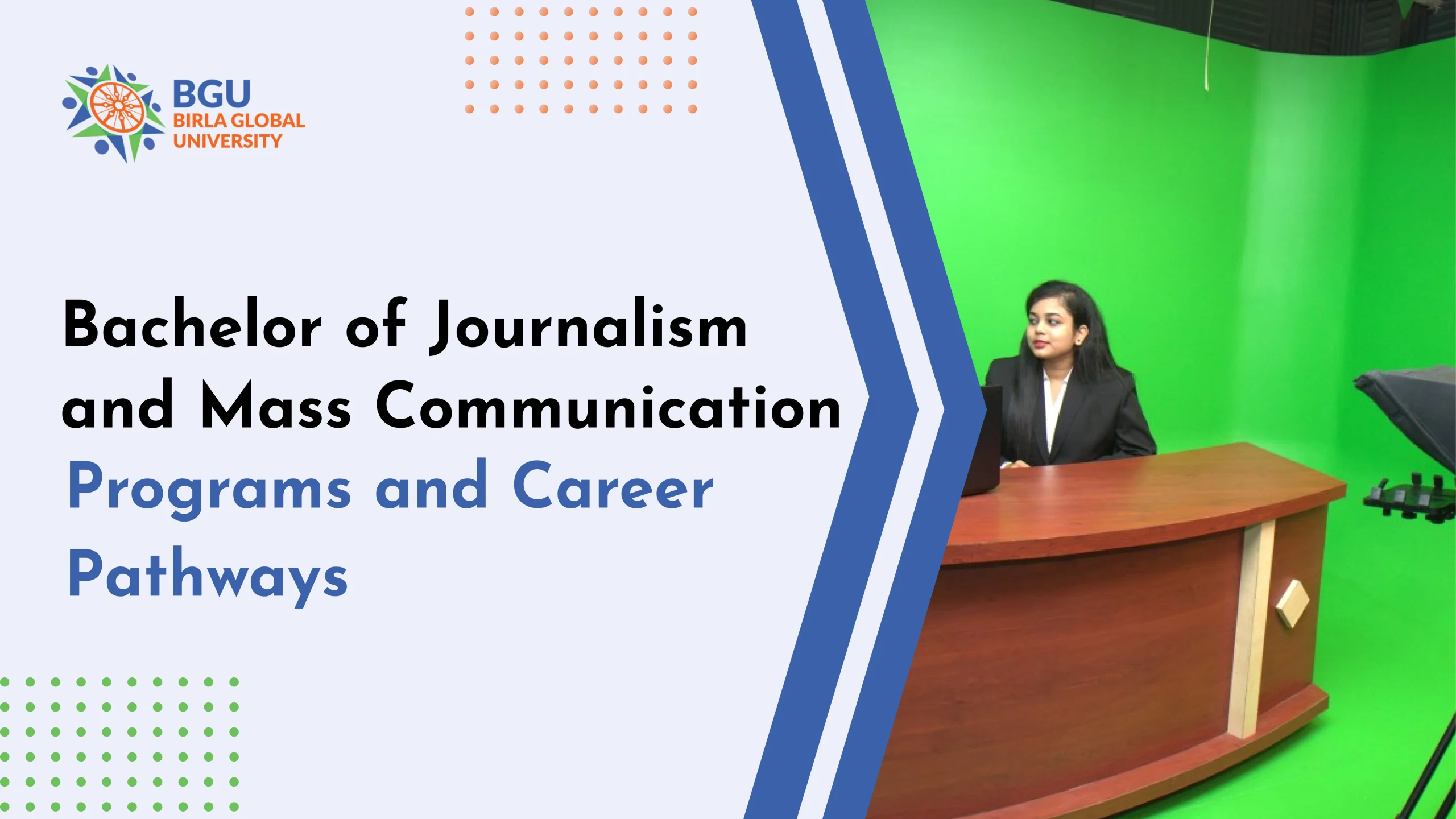
You may also like to tell stories or share stories, break the latest news or create content that connects our society. A bachelor of arts degree in Journalism and Mass Communication might be just what you have been looking for. Today’s busy world relies on media being available, 24 hours a day, 7 days a week; because of this demand, there is an increased need for trained communication professionals. The Birla School of Communication (located at the Birla Global University, Bhubaneswar) has developed and structured a multi-faceted, industry-oriented program in journalism and mass communication. With this guide, you’ll learn all that you would like to know about this program.
The scope of journalism and mass communication education has expanded dramatically over the last decade. From traditional print and broadcast media to digital journalism, podcasting, content creation, and public relations — the media industry today offers a wide variety of career pathways.
At BGU, the Bachelor of Journalism and Mass Communication program is structured to align with the National Education Policy (NEP) 2020 and follows a Choice-Based Credit System (CBCS). This means students have the freedom to explore interdisciplinary subjects offered across different schools within the university — making their education more flexible and industry-relevant.
The program provides a full range of technical knowledge, theoretical understanding, and artistic expression required to thrive as a media professional in a digital era where media, art, and communication converge across multiple screens and platforms.
A well-designed journalism and mass communication program does much more than teach you how to write news articles or record videos. Here's a look at the key skills students develop at BGU:
Before applying for a bachelor of journalism and mass communication program at BGU, it is important to understand the eligibility requirements.
| Requirement | Details |
| Qualifying Examination | 10+2 or equivalent |
| Minimum Marks Required | 50% or equivalent CGPA |
| Appearing Candidates | Students appearing in their final board exams can also apply |
| Stream Requirement | Open to students from any stream |
One of the best things about this program is its inclusive admissions approach. Whether you come from Science, Commerce, or Arts, you are eligible to apply — as long as you meet the minimum academic requirement. This makes BAJMC a genuinely accessible choice for students with diverse educational backgrounds.
Birla Global University (BGU) keeps its admissions process straightforward and merit-based. Here is how students are selected:
There is no mandatory portfolio submission for undergraduate admissions, making it easier for students with a genuine interest in media and communication to apply without prior professional experience.
The curriculum of the bachelor of journalism and mass communication at BGU is thoughtfully designed to offer both theoretical depth and practical relevance. Courses are divided into four broad categories:
The program covers a wide range of topics, including:
| Subject Area | Focus |
| Media History & Theory | Evolution of media, communication models, media ethics |
| Print Journalism | News writing, reporting, editing, layout design |
| Broadcast Media Studies | Radio production, TV journalism, documentary filmmaking |
| Digital Journalism | Online content creation, social media, data journalism |
| Public Relations Education | PR strategies, corporate communication, event management |
| Advertising | Campaign planning, copywriting, brand communication |
| Research Methods | Media research, audience studies, analytics |
The curriculum is regularly updated to reflect the latest developments in the media industry, ensuring students graduate with knowledge that is relevant and current.
One of the strongest aspects of BGU's journalism program is the emphasis on real-world learning. The Birla School of Communication is equipped with modern audio-visual facilities, including a dedicated Media Lab and production studios for both print and electronic media training. Here's what students can expect:
Additionally, BGU also runs Radio BGU — an in-house radio platform that gives students live practice in radio broadcasting and content production, a rare and valuable opportunity for communication students.
Many career opportunities are available through a Bachelor of Journalism and Mass Communication because of the breadth of potential professional roles in Journalism and/or Communication, from reporter, editor, and content creator to PR professional, Radio Jockey (RJ), and advertising and corporate communication roles. This program develops skills necessary for successful storytelling, communication, and media production. It also provides pathways to higher degrees such as a Master's degree or an MBA in Communication Management from BGU. In summary, it prepares students for rewarding and successful careers in the media, branding, and/or communication industries.
What is the eligibility criteria for Bachelor of Journalism and Mass Communication?
Candidates must have passed their 10+2 examination with a minimum of 50% marks or an equivalent CGPA. Students who are currently appearing in their final board examinations can also apply.
Is an entrance exam required for BAJMC admissions?
BAJMC admissions at BGU are primarily merit-based, using Class 10 and 12 board marks. BGU may also conduct its entrance test (BET) and call candidates for a personal interview as part of the selection process.
What skills are essential for students applying to BAJMC programs?
A keen interest in current events, strong communication skills, curiosity, creativity, and an ability to work under pressure are valuable traits. The program itself is designed to build these skills progressively, so prior expertise is not mandatory.
Does BAJMC focus more on theory or practical media training?
The BAJMC program at BGU balances both. The curriculum includes theoretical lectures alongside practical studio sessions, field trips, internships, and live media projects — ensuring students are equally prepared for academic understanding and real-world media work.
What career options are available after completing BAJMC?
Graduates can pursue careers as journalists, content creators, PR executives, radio jockeys, advertising professionals, documentary filmmakers, corporate communication specialists, or media researchers, among many other roles.
Can students from any stream apply for journalism and mass communication programs?
Yes. The BAJMC program at BGU is open to students from any academic stream — Science, Commerce, or Arts — as long as they meet the minimum eligibility requirement of 50% in their 10+2 examination.
Is BAJMC suitable for digital media and content creation careers?
Absolutely. The BAJMC curriculum at BGU specifically incorporates digital journalism, social media content creation, and multi-platform storytelling to prepare students for the fast-growing digital media landscape.
